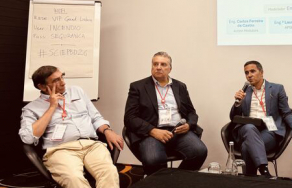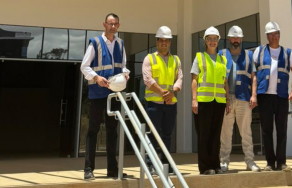
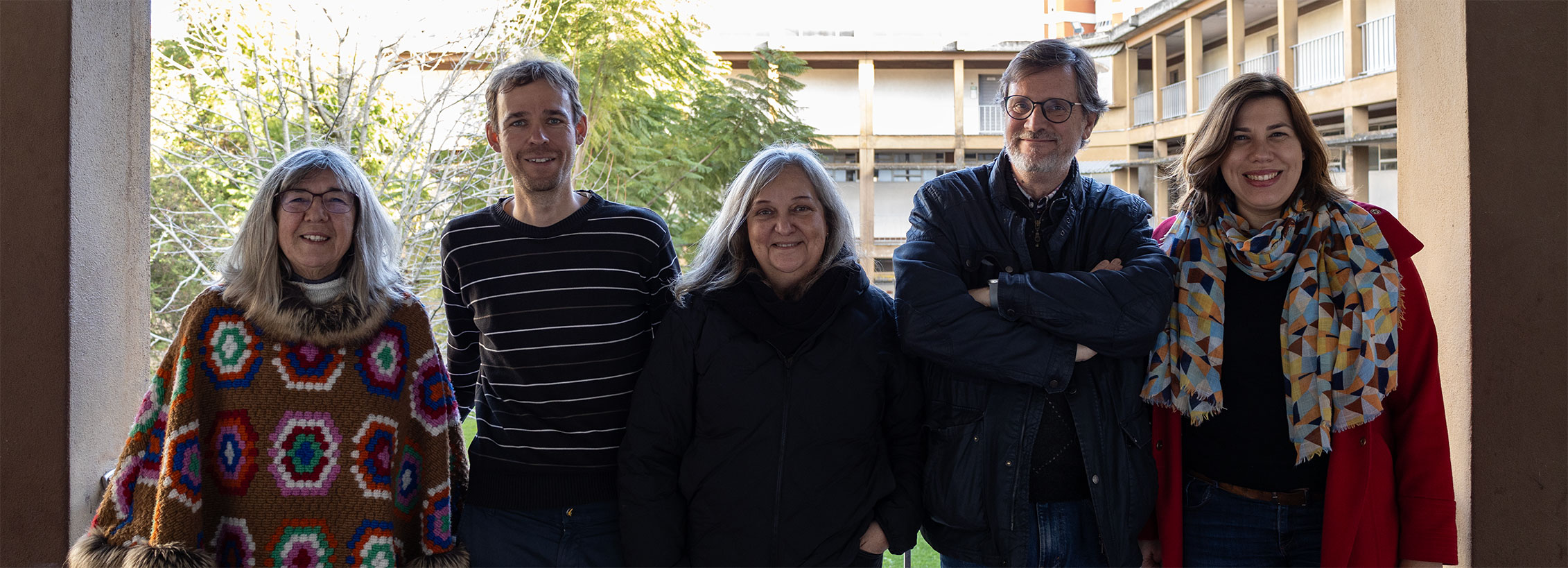
PT‑AQUASEIS is ISEL’s most recent scientific research project, led by Professor Graça Silveira (DF/ISEL). The initiative aims to introduce, for the first time in Portugal, the use of seismic ambient noise interferometry (SANI) as a tool for the continuous monitoring of aquifers in the south of the country.
The project uses a network of more than 30 seismic stations, combining permanent and temporary stations, to quantify variations in subsurface physical properties induced by fluctuations in aquifer recharge and discharge. Results will be validated in the Querença‑Silves Aquifer, in the Algarve—one of the best‑characterized ground water systems in Portugal—through the joint analysis of seismic, piezometric, InSAR, GPS, and geoelectrical data.
PT‑AQUASEIS is funded by the Foundation for Science and Technology (FCT) and developed by a multidisciplinary national and international team, with expertise in Physics, Seismology, Hydrogeology, Geophysics, and Geodesy. The IDL@ISEL team includes Graça Silveira (principal investigator), Alexandra Afilhado, David Schlaphorst, Joana Ribeiro, and Nuno Dias, and the project is associated with the Dom Luiz Institute research unit (UID).
Project partner institutions include the University of the Algarve and FCiências.ID – Association for Research and Development of Sciences.

Meeting the challenges of water scarcity
Portugal faces a scenario of increasing water scarcity, particularly in the southern. Traditional methods of aquifer monitoring, although precise, involve high costs and have limitations in their temporal and spatial resolution.
SANI thus emerges as a cost‑effective, continuous method with high temporal resolution, enabling detailed study of aquifer dynamics at the regional scale. This innovative approach opens the door to more sustainable water resource management and a also contributing to a better response to climate challenges.
How does ambient noise interferometry work?
Like seismic waves generated by earthquakes, waves produced by ambient noise sources propagate through the subsurface at velocities that depend directly on the physical characteristics of rocks—including density, elasticity, and porosity—and on their degree of saturation by fluids.
Thus, significant fluctuations in the amount of stored groundwater cause perturbations in the stress state and in the pore filling of the geological materials that constitute aquifers, which are reflected in changes in the propagation velocity of seismic waves in the subsurface. Therefore, relative variations in propagation velocity can be used as a proxy to assess changes in the amount of water available in aquifers.
This method makes it possible to evaluate transient processes such as recharge, depletion, or instability associated with overexploitation of the aquifer, seasonal fluctuations, or extreme events.

Impact and dissemination
Project results will be disseminated in international scientific journals, conferences, and workshops. The work will also involve students and early‑career researchers, amplifying academic impact.
Beyond the scientific community, results will be shared with governmental and regional entities, including the Portuguese Institute for Sea and Atmosphere (IPMA), the Portuguese Environment Agency (APA), and municipal authorities, ensuring that the knowledge generated contributes directly to a better knowledge of water resources.
PT‑AQUASEIS also includes outreach activities for society, notably through the Seismology‑at‑Schools initiative, bringing younger audiences closer to science and environmental monitoring.