
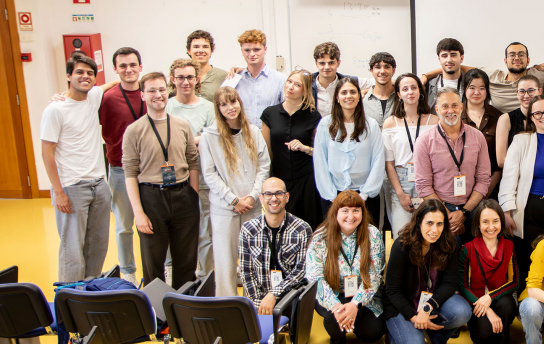
From May 11 to 16, ISEL hosted the in-person component of the blended intensive programme (BIP) “Smart Cities & Integrated Mobility – Innovative Solutions for Multimodal Public Transport Systems”, coordinated by Professor Matilde Pato (DEI/ISEL).The initiative provided an intensive learning experience focused on current challenges in sustainable urban mobility, highlighting the importance of programs that combine theoretical and practical training with international cooperation to reflect on the future of smart cities. The programme included online learning, in-person sessions in Lisbon, and applied work in real-world contexts, enabling participants to develop advanced skills in multimodal planning, public transport system integration, and intelligent mobility management.The BIP “Smart Cities & Integrated Mobility” brought together students and lecturers from universities in several countries (Portugal, the Netherlands, Ukraine, Georgia, and Poland), members of the U!REKA network. Its partners included the Lisbon City Council, Oeiras Municipality, and Parques Tejo.[flickr-photoset:id=72177720333771626, size=q, num=10]Ver no flickr
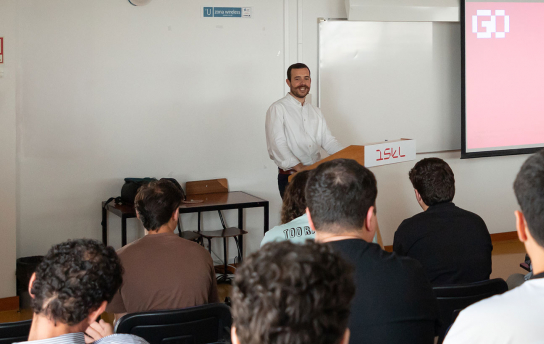
ISEL promoted a series of lectures and a technical visit as part of the activities of the Department of Civil Engineering (DEC) and the Civil Engineering undergraduate program.The initiatives addressed fundamental themes such as the design of reinforced concrete structures, the management and supervision of works, and the challenges associated with real-world construction cases, with the participation of professionals from the sector, namely:- Eng. Nuno Travassos, "Practical Cases in the Design of Reinforced Concrete Structures", March 24, 2026;- Eng. Edgar Pires, "Project Management and Supervision in Civil Construction", April 27, 2026;- Eng. Filipe Vasques, "Main Challenges and Solutions Found in the Construction of the Ferreirinha Bridge", May 7, 2026.In addition to the lectures, there was a technical visit to a remodeling project in Lisbon, promoted by the company HCI, allowing students direct contact with the real-world construction context.These activities, integrated into different curricular units of the undergraduate program, were open to the academic community and the general public, contributing to strengthening the link between theoretical training and professional practice.The initiative was promoted by the Coordinating Committee of the Civil Engineering undergraduate program and organized by Professor Maria Idália Gomes (DEC/ISEL).
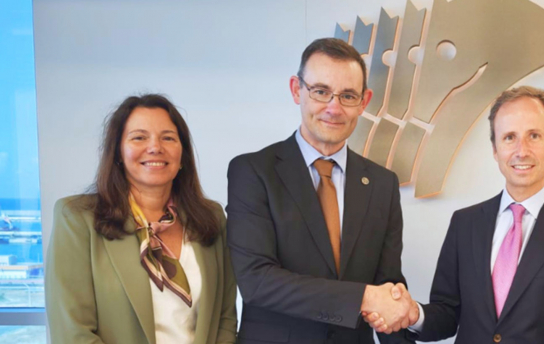
ISEL and the Port Authority of Sines and Algarve (APS) formalized a new institutional cooperation protocol on May 12, 2026, reinforcing ISEL's role as a strategic partner.The protocol was signed at APS facilities, bringing together representatives from both institutions. This agreement consolidates and deepens an existing collaboration in which ISEL has made a significant contribution.This partnership includes planned workshops and seminars in ISEL courses and participation in R&D projects in the areas of energy transition, digitalization, cybersecurity, and port security and protection. Images APS
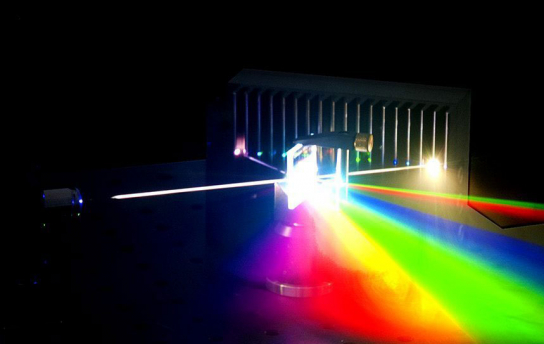
The CTS-ISEL research unit marks UNESCO’s International Day of Light (May 16) with a public demonstration of its newly acquired supercontinuum white-light laser source.The new light source, supplied by NKT Photonics, is a state-of-the-art “white-light laser” system based on supercontinuum generation in photonic crystal fiber. Unlike conventional lasers, which emit a single color, this system produces a bright, diffraction-limited beam that spans a very wide spectral range—from the visible to the infrared—making it ideal for applications such as spectroscopy, optical coherence tomography, and advanced microscopy.The laser is part of new scientific equipment funded under the national PRR EQUIPAR+2 initiative, which aims to modernize and strengthen the infrastructure of Portuguese research units through the acquisition of cutting-edge instrumentation supported by the Recovery and Resilience Plan.About the public demonstrationAt the event, which will take place on May 15 at the Photonics Laboratory, CTS-ISEL researchers will present a brief introduction to the physics behind supercontinuum generation, explaining how intense ultrashort laser pulses, when propagating through specially designed optical fibers, can be converted into a continuous “rainbow” of wavelengths. This will be followed by a live demonstration of the system’s capabilities, showing how its broadband, high-brightness emission can be filtered and tailored to different photonics experiments.The session will also feature a presentation of some of the first planned applications for this laser at the CTS-ISEL Photonics Laboratory, including broadband component characterization, high-precision optical spectroscopy, and the development of new imaging and detection techniques for biomedical and industrial diagnostics.By opening its laboratory to the community, CTS-ISEL aims to highlight how investment in advanced photonic technologies contributes to high-impact research, the training of students and engineers, and innovation with benefits for society as a whole.About the International Day of LightUNESCO’s International Day of Light, celebrated on May 16, highlights the crucial role of light and light-based technologies in science, education, culture, and sustainable development. The date also commemorates the first successful operation of a laser, carried out by Theodore Maiman on May 16, 1960.
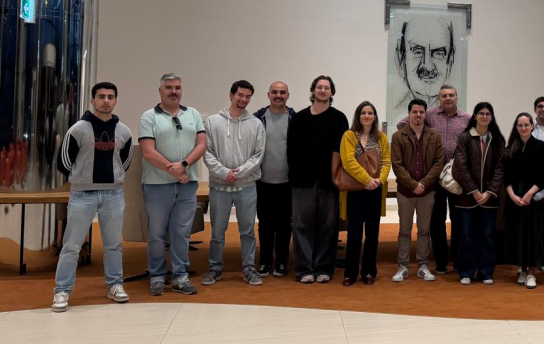
On April 22, students from the Master’s degree in Mechanical Engineering at ISEL visited the Technical Facilities of the Champalimaud Foundation buildings, as part of the Maintenance of Technical Installations subject, coordinated by lecturers Nuno Henriques and Cláudia Casaca (DEM/ISEL).The initiative focused in particular on the Research Centre Building and the new Botton‑Champalimaud Pancreatic Cancer Centre, and was guided by the Director of Maintenance of the Champalimaud Foundation, Engineer Luís Gomes, an ISEL alumnus, accompanied by several members of his team. During the visit, the main technical infrastructures of the buildings were presented, with special emphasis on maintenance and operational practices, as well as on the critical role these installations play in supporting the scientific and clinical activities carried out by the Foundation.This visit provided students with a valuable opportunity for direct contact with highly complex technical systems, helping to strengthen the link between the theoretical content taught in class and its practical application in a real-world context.
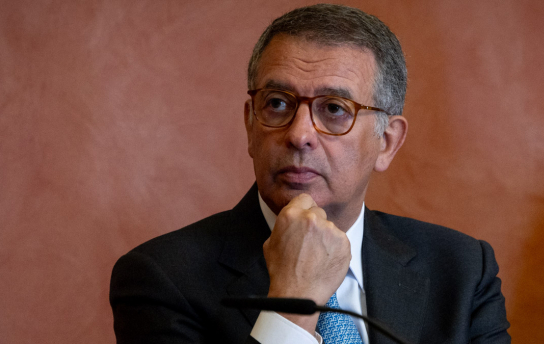
Professor Nuno Cota (DEETC/ISEL) took part in a meeting promoted by the President of the Republic on the prevention of and response to natural hazards, held at the Belém Palace. The meeting brought together more than two dozen specialists from different scientific and technical fields.Nuno Cota, specialist and researcher in the areas of communications resilience and emergency communications, contributed with his know‑how and technical experience to the central objectives of the session, focused on knowledge sharing, convergence of perspectives, and the identification of strategies aimed at preventing and responding to future natural hazards, with particular emphasis on communications systems and their resilience in emergency scenarios.The initiative followed the Open Presidency held in regions of the Centre of the country recently affected by severe weather events. It was attended by specialists from the fields of energy, telecommunications, emergency communications, agriculture, forestry, wildfires, infrastructure, climate, sustainability and the environment, landscape, biodiversity, and nature conservation.The meeting fulfilled a commitment made by the Head of State after visiting the affected areas, making it possible to hear concrete proposals and promote multidisciplinary dialogue among experts, with a view to defining sustainable and effective solutions to the challenges currently facing the country.Professor Nuno Cota’s participation reflects ISEL’s active involvement in cooperation between academia and public institutions, contributing scientific knowledge to the definition of solutions in strategic areas for the country.Photographs: Miguel Figueiredo Lopes / Presidência da República